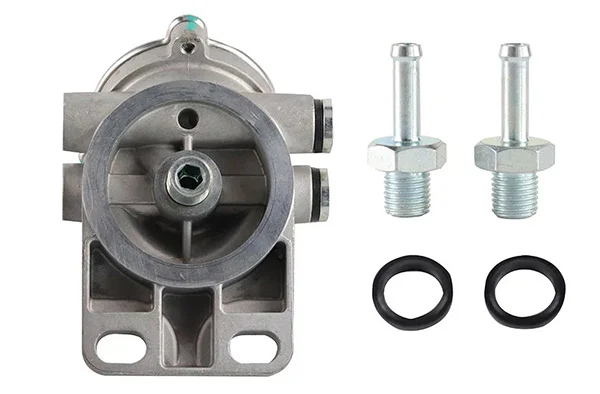
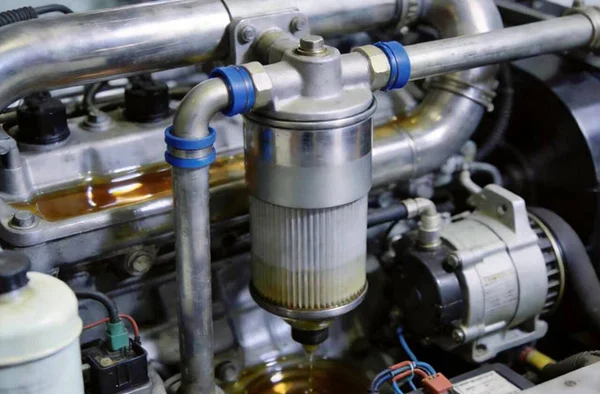
We wear face masks to protect ourselves from smog; for a car, the Gas Filter serves as its “mask.” Although easily overlooked, it is crucial for the longevity and operational stability of core vehicle components—making it an essential part of vehicle maintenance that should never be ignored.
Why the Gas Filter Is the Car’s “Mask”
Simply put, a vehicle requires a large volume of air for combustion while running. Along with the air come dust, grit, impurities, and even harmful gases. Without an Gas Filter, these contaminants would enter the engine indiscriminately. Over time, this causes the engine to suffer: minor issues include accelerated wear on cylinders and pistons, while severe consequences range from cylinder scoring and power loss to increased repair costs.
The Gas Filter’s role is to block these impurities, ensuring that only clean air enters the engine. Additionally, specialized Gas Filters are used in the battery cooling systems of some new energy vehicles and the air supply systems of hydrogen fuel cell vehicles; these protect battery cells and filter impurities from hydrogen gas, respectively, serving as vital lines of defense for core components.
Common Types of Gas Filters
- Dry Paper Filters: Currently the most widely used type in passenger vehicles. They feature resin-impregnated microporous filter paper, offering high filtration precision, low cost, and easy maintenance, though they lose effectiveness if they become damp.
- Wet (Oil-Type) Filters:These use polyurethane foam as the filter medium, soaked in engine oil to enhance adsorption. They have a dust-holding capacity 1.5 to 2 times that of paper filters, making them suitable for harsh, dusty, or sandy conditions, though they require periodic cleaning and re-oiling.
- Composite Filters:These utilize a dual-layer design combining a pre-filtration layer with HEPA filter paper. They achieve up to 99.97% filtration efficiency for 0.3-micron particles, meeting the rigorous intake requirements of turbocharged engines; high-end models also include an electrostatic adsorption layer to capture ultrafine particles.
- Oil-Bath Filters: Primarily used in construction vehicles and heavy-duty trucks, these employ a three-stage filtration process—combining inertial separation, an oil bath, and standard filtration—making them suitable for extremely dusty environments like mines.
Gas Filter Maintenance Recommendations
Gas Filter maintenance should be performed according to the vehicle’s owner’s manual; for standard fuel-powered vehicles, replacement is typically required every 10,000 to 20,000 kilometers. Many people fail to follow this seemingly simple piece of advice because they deem it unnecessary, thinking the Gas Filter doesn’t look dirty.
However, once the pores of a paper filter element become clogged with fine dust, airflow resistance increases—even if the filter appears clean—leading to reduced engine power and higher fuel consumption.
Avoid the temptation to buy cheap, low-quality aftermarket parts. Inferior filters often have uneven pore sizes and poor filtration precision; not only do they fail to trap fine particles, but the filter material may also shed fibers, potentially causing irreversible damage to the engine. It is recommended to use genuine parts or certified products from reputable brands.
Many repair shops use high-pressure air guns to blow dust off the filter surface for continued use; however, the high-pressure airflow can enlarge the filter’s pores, significantly compromising filtration efficiency. This practice should be reserved for emergency situations only and is not recommended for long-term reuse.